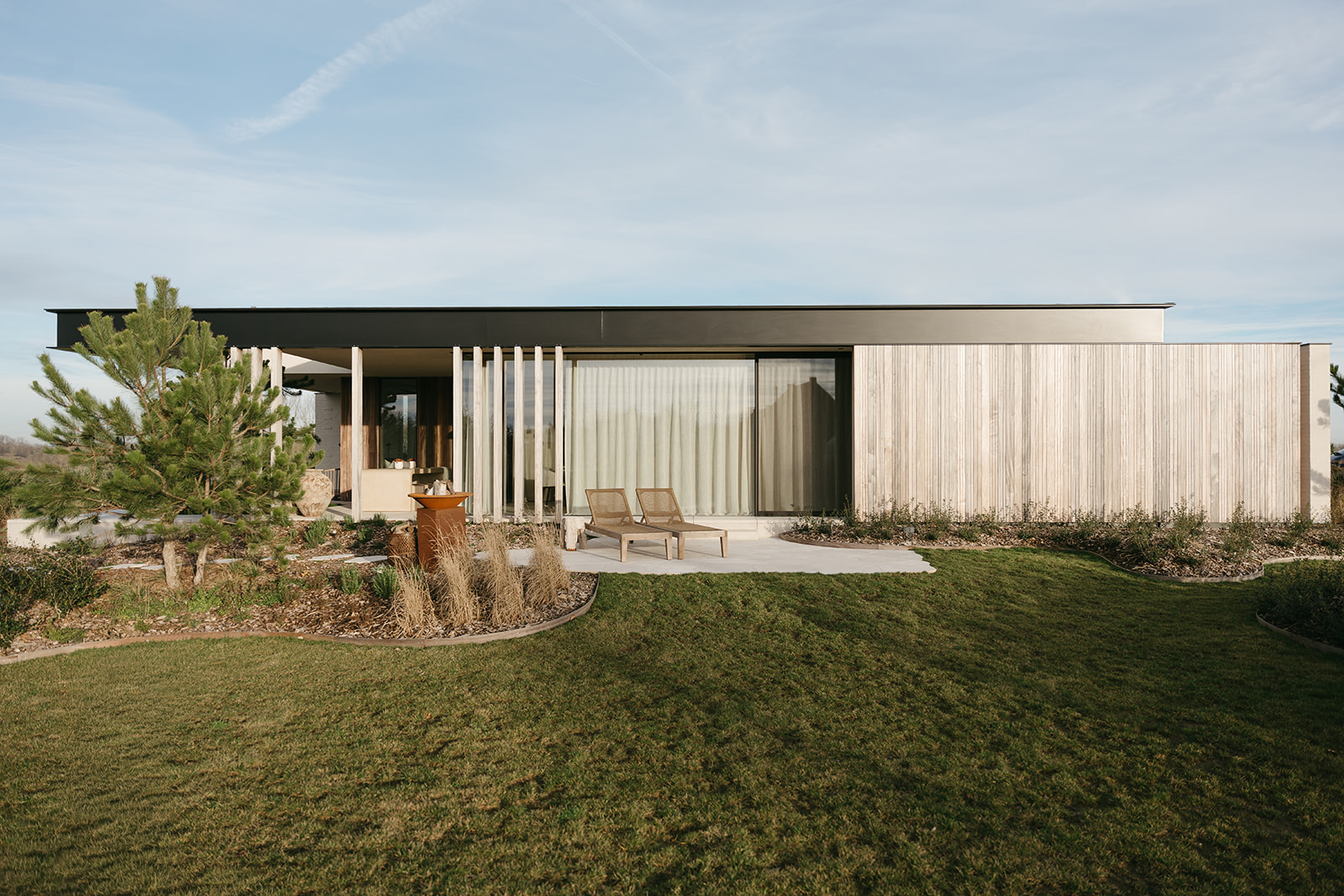
This isn’t a stock photo, by the way. It was shot as part of a content shoot for our client Derito.
Let's start there. The quality of stock photography has improved enormously over the years and, for certain purposes, it's a perfectly logical choice. You can quickly find the image you need without organising an entire production.
The same goes for product photography and other visual assets provided by manufacturers to their distributors. These images are often professionally produced, technically sound and ideal for showing a product clearly. There's little reason to reshoot every standalone product when the manufacturer already provides excellent material.
The problem starts when stock or supplier imagery stops supporting your brand and starts defining its visual identity.
An architect holding a set of plans. A smiling team gathered around a laptop. Or the exact same product image appearing on the websites of ten different distributors. We immediately understand what's being sold, but learn very little about the company selling it.
That's exactly where your own imagery needs to make the difference.
Companies invest in their own logo, colours, typography, website and tone of voice to become recognisable. So it seems strange to use imagery that any other company can buy for one of the most visible parts of that identity.
Original photo & video gives you something stock rarely can: context. Your actual people, products, projects, environment and way of working. Elements that are specific to your business and therefore much harder to replicate.
It doesn't need to be spectacular. It needs to be recognisably yours.
This becomes even more apparent for retailers and distributors. Suppliers provide professional product photography that's easy to use. As a result, the same images appear across the websites, webshops, advertising and social media of dozens of businesses selling the same product.
From the customer's perspective, the differences start to disappear. The product is the same, the photography is the same and often even the product pages look remarkably similar. So apart from price, what's left to make someone choose your business?
Original imagery can make the distributor's added value visible. Show the product in your own environment, as part of a completed project, in your showroom or being used by a customer. Combine product imagery with advice, expertise, service and the people behind the business. You're no longer simply selling your supplier's product. You're showing people why they should buy that product from you.
When everyone sells the same thing, how you sell it becomes part of what sets you apart.
We generally don't recommend relying on stock imagery for social media. Not because the images aren't good enough, but because social media is exactly where people expect to see something of the business itself.
Your team, a project, a delivery, a customer case, a look behind the scenes or a product in use tells people something a generic image can't. It gives them a reason to follow you and gradually builds recognition around your brand.
The same applies to distributors. If your social feed consists mainly of product photography and campaigns supplied directly by manufacturers, it can end up looking almost identical to the feeds of other distributors selling those same brands. At that point, you're primarily communicating for the manufacturer while your own business remains largely invisible.
Original content creation isn't simply about producing better-looking images. It gives your business something of its own to communicate: your expertise, people, projects, customers, way of working and point of view.
Your website tells people who you are. Social media should prove there's a real business behind it.
Take two identical interiors. Photograph one quickly with a smartphone and the other with careful attention to light, perspective, materials and detail. The interior hasn't changed, but the way we perceive it has.
The same happens with brands. Imagery helps determine whether a business feels personal or distant, accessible or exclusive, small or established.
Good brand photography doesn't simply document what's in front of the camera. It translates how a brand wants to be perceived.
Authentic doesn't mean unpolished. It means it's genuinely yours.
A photoshoot is sometimes treated as an investment for a new website. The images are created, placed on a few pages and the production is considered finished.
That's a missed opportunity.
With the right preparation, a single production can create assets for your website, social media, advertising, presentations, recruitment, campaigns, newsletters and sales materials. Combine photography with video and one production day can provide content for months.
That's why we approach content creation not as producing individual images, but as building a useful visual library around a brand.
The question then becomes less “What does this photoshoot cost?” and more “How much can we get out of this production?”
No. Not every image needs to be created specifically for your business. Stock can work perfectly well for a presentation, an article, a concept or something that's difficult to photograph yourself.
The decision becomes more important for the images that carry your brand: your homepage, campaigns, team, products, projects and the other places where potential customers get to know your business.
That's where looking professional isn't enough. You want to be recognisable.
Stock almost always wins on speed and upfront cost. Original photography wins when recognition, credibility and brand experience start to matter.
For many businesses, the answer isn't necessarily never use stock again. It's about being more deliberate about where stock is enough and where an image genuinely needs to be yours.
Because ultimately, the question isn't whether a stock photo looks good enough.
It's whether it says something only your brand can say.


